

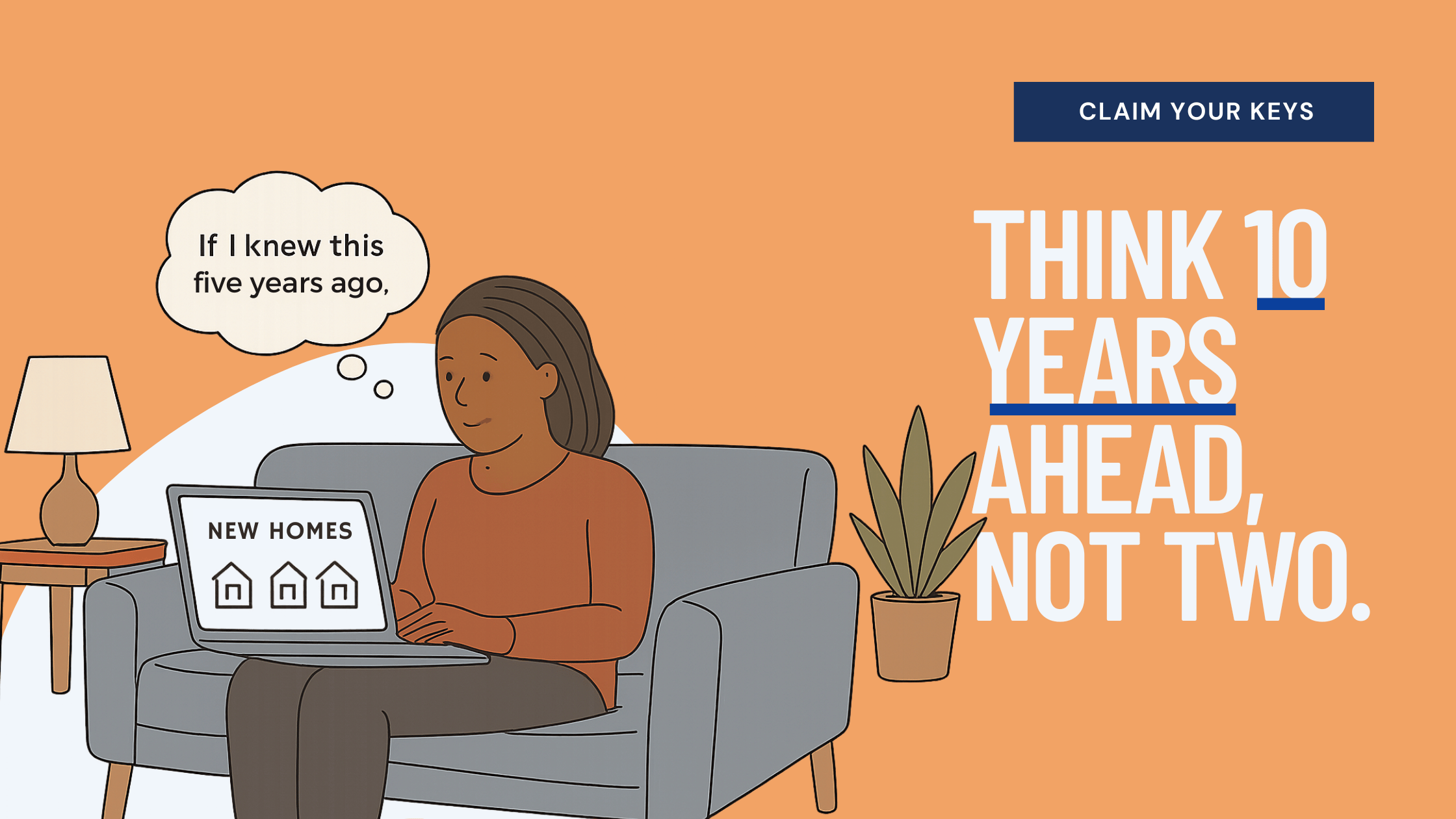
I’ll be house hunting in the near future for home number three. I’ll be honest with you; I didn’t think I’d be here this soon.
When I bought my second home in 2021, I thought I was settling in for some time. The house checked all my boxes: great neighborhood, good schools nearby, and a reasonable price. I was thrilled.
But here’s what I didn’t do: I didn’t think far enough into the future. I didn’t ask myself the hard questions about how my life might change. And now, almost five years later, I’m preparing to search again because my needs have evolved in ways I never anticipated.
I have an aging parent. The second-floor guest room that seemed fine back then is now inconvenient due to the stairs.
The appeal of living near a nature reserve in the city I like? I had no idea it came with scorpions and coyotes. It’s a lot less charming when you’re actually living with it.
So I’m returning to square one, and this time, I’m approaching it differently. This time, I’m thinking 10 years ahead, not just the next couple of years. And in doing so, I want to help you avoid making the same mistake I did.
Let me walk you through how to figure out what you truly need versus what you want, and how to choose a first home that will grow with you, not one you’ll outgrow in a few years.
Why This Matters More Than You Think
Here’s the reality: buying and selling a home is expensive. Really expensive.
When you sell, you’re paying:
- 5 to 6% in agent commissions (on a $300,000 home, that’s $15,000-$18,000)
- 1 to 3% in closing costs
- Moving expenses
- Potential repairs or staging to get the house market-ready
- Time prepping the home to show each day
That’s easily $20,000 to $30,000 walking out the door, not to mention the stress and disruption to your life.
If you buy a home that doesn’t work for you long-term, you’re also possibly setting yourself up to lose tens of thousands of dollars in just a few years. And that’s assuming the market hasn’t shifted against you.
This is why getting it right the first time matters so much. You don’t want to be me, house-hunting again, because I didn’t think through my future needs.
The Difference Between Needs and Wants
Let’s get clear on definitions, because this is where most first-time buyers trip up.
Needs are non-negotiable. These are the things that fundamentally affect your ability to live comfortably and safely in the home. Without these, the house won’t work for your life.
Wants are nice-to-haves. These are the things that would make you happier or more comfortable, but you could live without them or find creative workarounds.
The problem? Most people think their wants are needs. They convince themselves they absolutely must have granite countertops, stainless steel appliances, or a finished basement, when in reality, those are wishes, not requirements.
Here’s a simple test: Ask yourself, “If this home had everything else I need but was missing this one thing, would I still be able to live here comfortably for seven to 10 years?”
If the answer is yes, it’s a want. If the answer is no, it’s a need.
My Mistake: What I Wish I’d Considered
Let me tell you exactly where I went wrong so you can learn from my experience.
Mistake #1: I Didn’t Plan for Aging Parents
Five years ago, my mom could handle stairs just fine. A second-floor guest room? No problem.
I never asked myself, “What if stairs get hard to navigate down the road?”
Now, when she visits, she doesn’t stay overnight. Thankfully, we’re not that far away, but it’s not ideal, and it definitely limits how often she visits me.
What I should have asked myself: Where will aging family members sleep when they visit? Can they access that space safely? Will they still be able to in 5, 10, or 15 years?
Mistake #2: I Romanticized “Nature in the City”
I loved the idea of living near green spaces. It felt peaceful and serene as I toured the home. What I didn’t anticipate was that wildlife in an urban setting meant tarantulas, bobcats, coyotes, and other creatures that make it stressful to let pets outside or feel completely safe in and out of your home.
What I should have asked myself: What kind of wildlife is common in this area? How will that affect my daily life and sense of security? Am I romanticizing something that will actually be a nuisance?
Mistake #3: I Focused on Right Now, Not 10 Years From Now
I bought based on my life at that moment. Single. No aging parent needing accommodation. The commute to work is short. But life changes fast. Jobs change. Family dynamics shift. Needs evolve.
What I should have asked myself: Where do I see myself in 5 years? 10 years? What significant life changes might happen (pets, marriage, kids, career shift, aging parents)? Does this home accommodate those changes?
How to Think About Your Future Self
This is one of the most crucial lessons in choosing your first home: realizing that you’re not buying for today. You’re buying for the next 5 to 10 years of your life.
Here are the life changes you need to plan for, even if they’re not happening right now:
Family Changes
Consider:
- Marriage or partnership (Will someone else be moving in?)
- Children (Even if you don’t have kids now, might you in 5 years?)
- Aging parents (Will they need to stay with you temporarily or permanently?)
- Adult children (If you have kids, will they boomerang back after college?)
Questions to ask:
- “If I were to get married tomorrow, would my partner be comfortable in this home?”
- “If I had a baby in two years, where would the nursery go?”
- “If my parent needed to move in for six months, where would they sleep?”
- “Can elderly or mobility-limited family members access all essential areas (bedroom, bathroom, kitchen)?”
Career Changes
Consider:
- Job relocation (How tied are you to that specific area?)
- Work-from-home needs (Do you need a dedicated office space?)
- Commute changes (What if you changed jobs and your commute doubled?)
- Career or job transition (Will your income sustain this over the long term?)
Questions to ask:
- “If I got a job offer across town, would this commute still work?”
- “If I were to work from home full-time, would I have space for an office?”
- “If I need to sell this home in three years due to job relocation, is this market liquid enough?”
Health and Mobility Changes
Consider:
- Aging (Will stairs become difficult as you age?)
- Injury or illness (Can you navigate this home with limited mobility?)
- Chronic conditions (Do you need single-level living for long-term health reasons?)
Questions to ask:
- “If I had a temporary injury (broken leg, surgery recovery), could I still access my bedroom and bathroom?”
- “In 10 years, will I be able to age in place here, or will I be forced to move?”
- “Are there accessibility features I should prioritize now, even if I don’t need them yet?”
Lifestyle Changes
Consider:
- Pets (current or future)
- Hobbies (gardening, woodworking, home gym)
- Social life (Do you entertain frequently?)
- Travel (Will you be home enough to maintain a yard?)
Questions to ask:
- “If I get a dog, is there a safe outdoor space?”
- “If I take up a space-intensive hobby, where would I put it?”
- “If I start traveling frequently for work, can I afford and manage the upkeep of this home?”
The Flexible Wants Framework
Now let’s talk about wants. These are the things you’d love to have but could live without or find creative solutions for. The key is being flexible and understanding that wants can often be added, modified, or worked on later.
Nice-to-Have Wants
These improve your quality of life but aren’t deal-breakers.
Examples:
- Updated kitchen (You can renovate later.)
- Finished basement (You can finish it yourself if you’re handy.)
- Large backyard (Nearby parks can substitute.)
- Walk-in closets (Organization systems can maximize smaller closets.)
- Hardwood floors (You can replace the carpet later.)
- Open floor plan (You can potentially remove walls.)
The question to ask: “Could I add, change, or work around this in the future?”
If yes, it’s a flexible want.
Lifestyle Wants
These align with your current lifestyle but might change.
Examples:
- Home office (could use bedroom, dining room, or rent coworking space)
- Home gym (could join a gym, workout outdoors, or use the garage)
- Entertainment space (could host smaller gatherings or use outdoor spaces)
- Pool (could use community pool, join swim club)
The question to ask: “Is there another way I could fulfill this need outside the home?”
If yes, it’s a lifestyle want that’s negotiable.
Aesthetic Wants
These are about preference and taste, not function.
Examples:
- Specific architectural style (farmhouse, modern, craftsman)
- Certain exterior colors or materials
- Luxury finishes (granite, tile, fixtures)
- Trendy features (shiplap, accent walls, statement lighting)
- Curb appeal (landscaping, front porch)
The question to ask: “Does this affect how the home functions, or just how it looks?”
If it’s only aesthetic, it’s a want. The aesthetics can be changed.
The “Deal-Breaker vs. Disappointment” Test
This is how you figure out if something is truly a need or just a strong want.
Deal-Breaker (Need): “If this home had everything else I want but lacked this one thing, I would not buy it.”
Disappointment (Want): “If this home had everything else I want but lacked this one thing, I’d be disappointed but would still buy it.”
Let me give you examples from my own future requirements:
Deal-breaker: Main-floor bedroom and bathroom. After learning from my mistake, this is now non-negotiable for me because I need to accommodate aging family members.
Disappointment: Gourmet kitchen with quartz countertops and professional appliances. Would I love it? Absolutely. But if the house has everything else and the kitchen is just functional and dated, I can live with it or upgrade it later.
Deal-Breaker: Safe outdoor space without dangerous wildlife.
Disappointment: Flex space for a home gym. Would I love it? Yes. But I can work out in the living room, at a nearby gym, or finish the basement later.
See the difference? Deal-breakers affect your safety, health, or ability to function in the home. Disappointments affect your happiness, but they don’t prevent you from living comfortably.
Creative Compromises: When “Almost” Is Good Enough
Sometimes a home doesn’t have exactly what you want, but there’s a workaround that makes it work. Being open to creative solutions significantly expands your options.
Bedroom Count Compromises
Want: 3 bedrooms
Home has: 2 bedrooms + office
Solution: Use the office as a guest room with a Murphy bed or sofa bed. It functions as both an office and an occasional bedroom.
Want: 4 bedrooms
Home has: 3 bedrooms + flex room
Solution: Convert the flex space into a nursery or bedroom.
Space Compromises
Want: Dedicated home office
Home has: Open corner or nook in living room or bedroom
Solution: Use furniture to create a defined office nook. A desk, shelving, and a room divider can create a functional workspace.
Want: Formal dining room
Home has: Open kitchen with breakfast nook
Solution: Place a dining table in the living space if space or layout permits, or create an outdoor dining area for entertaining.
Outdoor Space Compromises
Want: Large private backyard
Home has: Small yard, but the neighborhood has parks
Solution: Use nearby parks for recreation.
Storage Compromises
Want: Walk-in closets
Home has: Standard reach-in closets
Solution: Install closet organization systems to maximize space. Use under-bed storage and over-door organizers.
Want: Basement or attic storage
Home has: Limited built-in storage
Solution: Add an outdoor shed, utilize the garage space, or install shelving in unused areas.
How I’m Approaching Home #3 Differently
Let me show you exactly how I’m applying these lessons to my current search.
My Non-Negotiables (Needs):
- Main floor bedroom and full bathroom (aging parents, future mobility needs)
- Small and safe outdoor space (no dangerous wildlife, secure for potential pets)
- Carport or garage parking (not dealing with street parking or car damage from hailstorms)
- Within 30 minutes of work (long commutes drain me)
- No HOA or reasonable HOA (under $250/month, no restrictive rules)
- Solid bones (good roof, functional HVAC, no major structural issues)
- Neighborhood with good resale value (research valuation stats for the past 10 years)
My Flexible Wants:
- Updated kitchen (nice to have, but I can renovate)
- Hardwood floors (prefer them, but can replace carpet later)
- Home office (would love a dedicated space, but can use a bedroom or nook)
- Three bedrooms (ideal, but I can make two bedrooms + office space work)
My Creative Compromises I’m Willing to Accept:
- If there’s no dedicated office, but there’s a bonus room or large landing, that works.
- If the kitchen is dated but functional, I’ll buy and renovate before I move in.
- If the yard is larger than I’d like, I can outsource yard work or consider artificial turf.
My Deal-Breakers:
- No main floor bedroom/bathroom (learned this lesson)
- Wildlife safety concerns (learned this lesson, too)
- More than a 45-minute commute to work (I know myself well.)
- Needs more than $20K in immediate repairs (can do more repairs along the way)
- Unsafe neighborhood (My single ladies can appreciate this.)
See how specific I am this time? That’s because I’ve lived through the consequences of not thinking this through the first time.
The 10-Year Test
Before you make an offer on any home, run it through this test:
Imagine it’s 10 years from now. Ask yourself:
- If I have kids (or more kids), does this home have room for them?
- If my parents need help, can they stay here comfortably and safely?
- If I’m still working, is this commute still manageable?
- If I’m working from home, do I have adequate space?
- If my income stays the same, can I still afford this home?
- If my health or mobility changes, can I still navigate this home?
- If I want to sell, will this home still be desirable to buyers?
- If neighborhood trends continue, will this area still be safe and stable?
- If I develop new hobbies or interests, does this home have space for them?
- If life throws me a curveball, does this home offer flexibility to adapt?
If you can answer “yes” or “probably” to most of these questions, you’re likely looking at a home that will grow with you.
If you’re answering “no” or “I’m not sure” to several of them, keep looking.
Your Action Plan
Here’s precisely how to put all of this into practice:
Step 1: Complete a Needs vs. Wants Assessment
Spend real time on this. Don’t rush. Get specific.
Step 2: Share It With Your Real Estate Agent
Give your agent a copy of your completed assessment so they understand what’s truly non-negotiable versus what’s flexible. This makes their job easier and your search more efficient.
Step 3: Run Every Home Through the 10-Year Test
Before you schedule a showing, ask yourself whether this home will work for the next decade of your life, not just the following year.
Step 4: Bring the Assessment to Every Showing
Print it out or have it on your phone. As you tour, check off what the home has and what it doesn’t. This keeps you focused on what matters, not just what looks pretty.
Step 5: Sleep on It
Don’t make an offer the day you see a home, unless it’s a highly competitive market. Give yourself 24 hours to think through the 10-year test and review your notes. Emotional decisions can lead to regret.
Step 6: Trust Your Gut on Deal-Breakers
If something feels like a deal-breaker, it probably is. Don’t let anyone talk you into compromising on something that matters deeply to you.
Your first home doesn’t have to be your forever home. But it should be your “next 7 to 10 years” home. It should accommodate the life changes you can reasonably anticipate. It should have room for you to grow, not just to exist as you are right now.
Buy the home that fits your life trajectory, not just your life today. Your future self will thank you.


