

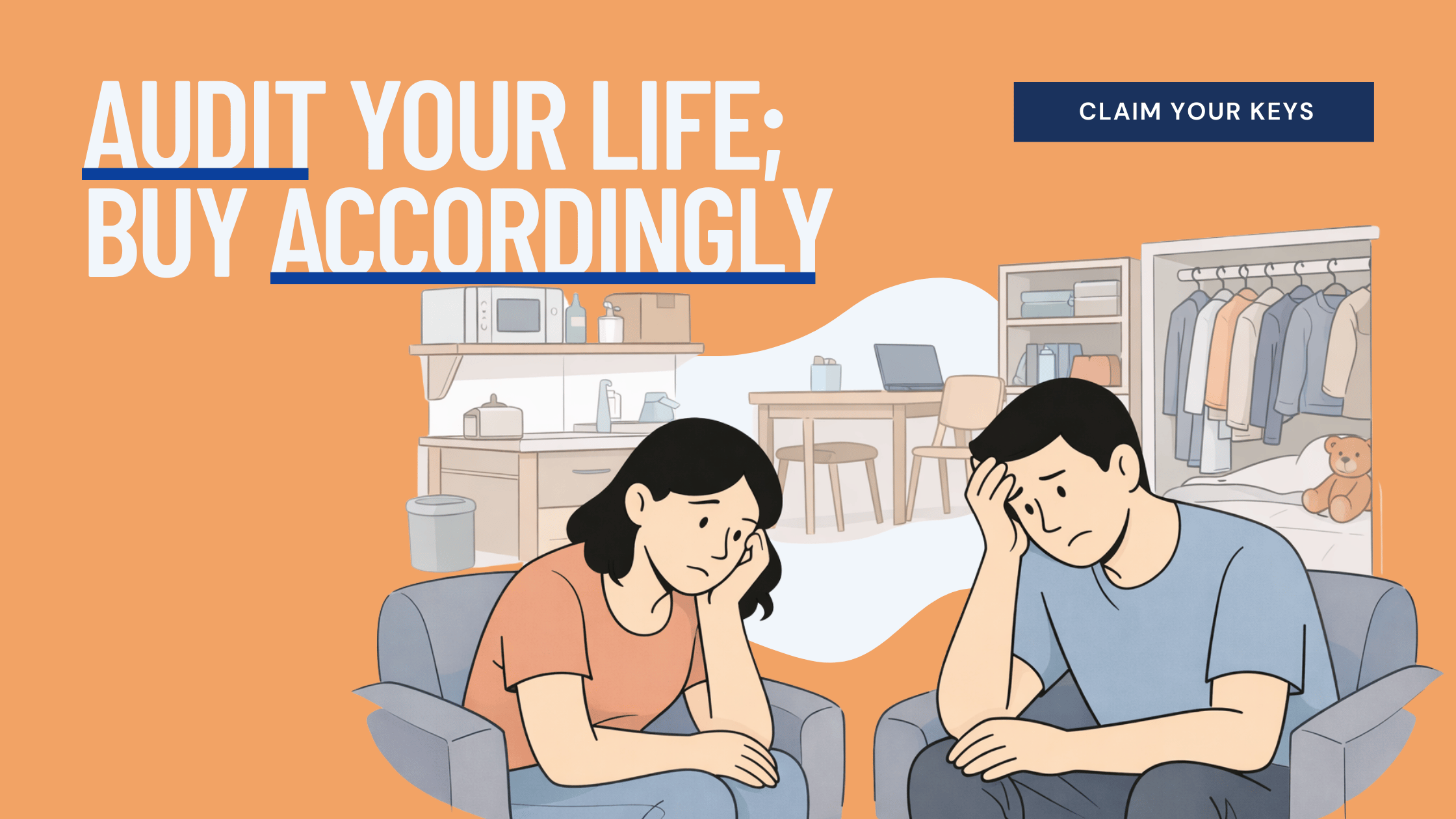
Buying a home is likely the biggest financial decision you’ll ever make, but many people still fall into the same common mistakes. I’m not talking about things like getting preapproved or hiring an inspector; you’ll hear that advice everywhere. Instead, I want to focus on the subtle psychological traps that can lead people to regret their purchase. I’ve seen buyers make these mistakes, and I’ve made one myself (Read about it here). The good news is that once you know what to look for, you can avoid these traps. Here are the mistakes I see first-time homebuyers make so that you can avoid them.
The Six Traps
Trap #1: Buying for Your Current Life Only
You might be focused on your current needs and forget how quickly life can change. In five years, your job, family, health, and priorities could be different.
Solution: Try the 10-year test. Think about the changes that are likely to happen in your life, not just what’s going on right now.
Trap #2: Letting FOMO Drive Your Decision
When you see others buying homes, you might feel pressured to act quickly, even if you’re not ready or haven’t found the right place yet.
Solution: Remember, your timeline is personal. It’s much better to wait a few more months for the right home than to rush and end up with the wrong one.
Trap #3: Falling in Love With Aesthetics
You walk into a beautifully staged home with gorgeous finishes, and suddenly, nothing else matters. You overlook the terrible commute, the lack of storage, or the dysfunctional layout because it’s pretty.
Solution: Look beyond the furniture, paint colors, and light fixtures. Pay attention to the structure, layout, location, and how the home works for you. Looks can change, but the basics are much more complex and expensive to fix.
Trap #4: Ignoring Red Flags Because Everything Else Is Great
The home checks 9 out of 10 boxes, so you tell yourself you can live with the one major issue (terrible schools, bad location, structural problems).
Solution: If it’s a deal-breaker, it’s a deal-breaker. Don’t compromise on your non-negotiables, no matter how perfect everything else seems.
Trap #5: Overestimating Your DIY Skills
You might think, “I can renovate that kitchen myself!” or “Finishing a basement can’t be that hard!” But after buying a fixer-upper, you may find you don’t have the time, skills, or budget for the repairs.
Solution: Be honest with yourself about what you can handle in terms of renovations. If you haven’t done it before, expect it to cost twice as much and take three times longer than you think.
Trap #6: Underestimating Lifestyle Fit
Maybe the house is lovely, but you dislike yard work and end up with a big lawn. Or you love having friends over, but the kitchen is small, and there’s no space to entertain.
Solution: Focus on how you actually live day-to-day, not how you wish you lived. If you don’t like cooking, you don’t need a fancy kitchen. If you’re not into gardening, skip the big yard.
Your Action Plan
Step 1: Take a reality check. Before you start house hunting, write down honest answers to these questions:
- What do I do every day?
- What have I consistently enjoyed or loathed over the past five years?
- What life changes are realistically coming in the next decade?
Bring this list with you when you tour homes.
Step 2: Make a list of your non-negotiables. Write down the things that would make you unhappy no matter what. Keep it short, three to five items at most, and stick to it. If a home doesn’t meet these, move on. No exceptions.
Step 3: Make a checklist for your home tours. Before visiting any homes, create a checklist to help you look beyond appearances. Include things like commute time, storage, layout, maintenance needs, and how the house fits your lifestyle. Bring it to every showing and use it.
Step 4: Try the “day in the life” test. For any home you’re seriously thinking about, visit at different times of day. Drive the commute during busy hours. Walk around the neighborhood on a weekend morning. Sit in the house and picture your real daily routine.
Step 5: Think about the next 10 years. For each home, ask yourself questions such as: What if I have children? What if I work from home? What if I need to care for my parents or my mobility changes? You can’t predict everything, but try to consider what’s likely.
Step 6: Seek an external opinion. Bring someone who knows you well but isn’t emotionally involved to see your top choices. Let them be completely honest. Sometimes the best feedback is, “I can’t see you being happy here.”
Step 7: Sleep on your decision. When you think you’ve found the right home, wait 48 hours before making an offer. Write down every concern, even the small ones. If you remain confident after two days and can address each issue, make an offer.
Remember, there’s no such thing as a perfect home. The real goal is to find a place that fits your life and won’t leave you with regrets. Take your time, trust yourself, and don’t let outside pressure rush your decision.


